Here's the thing about triple glazing - it's not always the right call. I see it over-specified all the time. Someone hears "high performance" and assumes triple is automatically better. But it adds cost, weight, and in warmer climates, the payback just isn't there.
Let me break down when triple actually earns its keep - and when a good double-glazed European unit is the smarter move.
Quick Comparison
| Configuration | Glass Lites | Gas Cavities | Typical Center-of-Glass U-Factor |
|---|---|---|---|
| Double glazing | 2 | 1 | ~0.25 - 0.30 Btu/(hr-ft2-F) |
| Triple glazing | 3 | 2 | ~0.15 - 0.20 Btu/(hr-ft2-F) |
Note: These are center-of-glass values. Overall window U-factor depends on frame design and thermal break quality. European aluminum frames with solid thermal breaks can hit overall U-factors of 0.20 to 0.22 even with double glazing - already beating many domestic aluminum systems at triple.
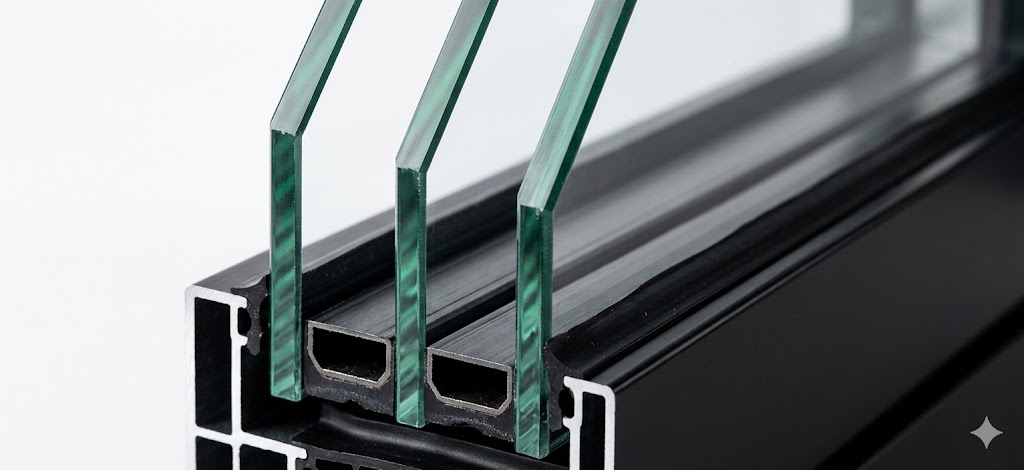
When Triple Glazing Is Worth It
Cold climates (IECC Zones 5-8). Northern Midwest, New England, Mountain states - the heating load reduction is real. A project in Minneapolis with a lot of glass will see meaningful savings going from U-0.30 double to U-0.18 triple. Payback is typically 7 to 12 years.
Passive House projects. PHI requirements for cold climates need overall window U-values at or below 0.14 W/m2K, which means triple glazing plus a high-performance frame. No way around it.
Noise-sensitive sites. The extra glass lite adds mass and improves STC ratings. Near airports, highways, or rail - triple can be worth it even in mild climates. For maximum acoustic performance, consider laminated glass on the inner or outer lite too.
High glazing-to-wall ratios. At 40-60% glazing, even a modest U-factor improvement has a big aggregate effect on the energy model - affects HVAC sizing, peak loads, everything.
When Double Glazing Is the Right Call
Warm and mixed climates (Zones 1-3). Florida, Texas, Gulf Coast, SoCal - the building isn't fighting conductive heat loss. SHGC and air infiltration matter more than an extra glass lite. Double with a good low-E coating meets or beats code at lower cost and less weight.
Large-format sliding doors and panels. Triple is 30-40% heavier. On large lift-slide doors, that means heavier hardware, beefier profiles, more structural support. Often better to optimize the double-glazed spec - better gas fill, improved low-E, warm-edge spacer.
When the math doesn't work. On a mid-size commercial project in Zone 4, triple might add $40K-$80K to the window package for $3K-$4K in annual energy savings. That's a 15+ year payback. That capital might do more good elsewhere. Always run it through the energy model. For the full cost picture including tariffs, see our 2026 tariff cost comparison.
Why European Double Glazing Outperforms Domestic Triple
This is the part most people miss. European aluminum double-glazed windows routinely outperform domestic aluminum triple-glazed windows. Two reasons:
Better thermal breaks. European profiles use continuous polyamide thermal breaks that are wider and more thermally resistive. The frame contributes less to heat loss, so the glass doesn't need to carry the whole performance burden.
Higher IGU standards. Warm-edge spacers, argon or krypton fills, and high-performance low-E coatings come standard - not as upgrades.
Before assuming you need triple glazing, check what a European double-glazed system actually delivers. I run these comparisons at the quoting stage - it's one of the first things I look at. See our system provider comparison for thermal data.
FAQ
Do you offer both double and triple glazing? Yes, both configurations across all the window and door systems I source. I'll recommend which one actually makes sense for your climate zone and project type.
What U-factor can I expect from triple-glazed European aluminum? Typical overall window U-factor is 0.18 to 0.22 Btu/(hr-ft2-F), depending on frame profile and glazing config. NFRC-format documentation can be provided for the specific assemblies when needed.
How does triple glazing affect lead time? Add a couple weeks - standard lead time for triple configurations is 10 to 14 weeks. Flag it early, because glass is often the critical path.
Bottom Line
Triple glazing earns its place in cold climates, Passive House builds, acoustic-sensitive sites, and high-glazing commercial projects. For warm climates, large sliding systems, or projects where the payback doesn't pencil - a well-specified European double-glazed unit is the better move.
The smart approach: spec the European aluminum frame first (the thermal break and IGU standards already put you ahead of most domestic options), then decide if triple is needed to close the gap to your target U-value.
I can provide performance data in NFRC format for both configurations when needed and help with the energy model comparison. Quotes come back in 24-48 hours.
Request a Quote | Schedule a Call
Kai, your window guy!