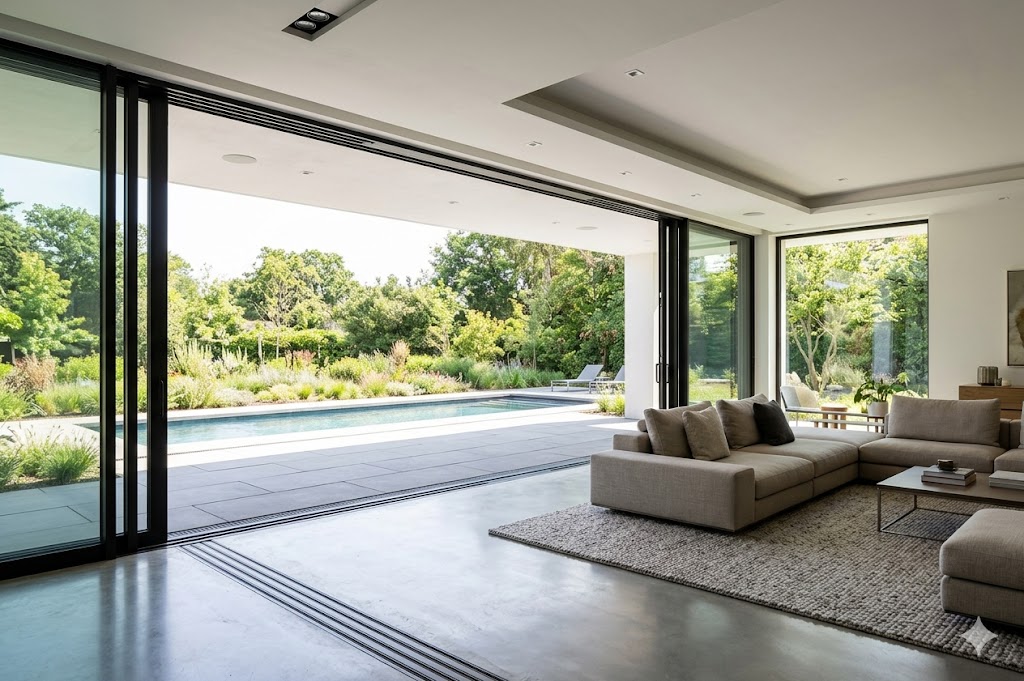
Big sliding glass doors are the hero moment on modern custom homes. But the bigger the opening, the more likely you'll hear complaints after install - "it's heavy," "it whistles in the wind," "we got water at the sill."
Smooth operation and airtightness aren't features you check a box for. They're the result of picking the right system, getting the engineering right, and installing it properly. Here's what you actually need to know.
Lift-Slide vs. Multi-Slide: The Core Difference
Lift-slide doors use a handle mechanism that lifts the panel off the seals during travel, then drops it into compression seals when closed. That means less friction when sliding and a tighter seal when locked - the panel's own weight does the work.
Multi-slide doors are chosen when you want maximum opening width, multiple moving panels, or a pocketing setup where panels disappear into the wall. They look great, but they typically rely on brush seals and tight tolerances rather than compression sealing - which means more sensitivity to install quality and weather exposure.
Quick Comparison
| Factor | Lift-Slide | Multi-Slide |
|---|---|---|
| Panel weight handling | Excellent - panel lifts during travel | Dependent on roller quality |
| Airtightness | High - compression seal when locked | Variable - brush/interlock dependent |
| Water resistance | Strong with correct sill detail | More sensitive to install tolerances |
| Max opening width | Typically 2-4 panels | Can accommodate many more panels |
| Pocketing | Not typical | Yes, including full pocket |
| Coastal / high-wind performance | Strong default choice | Requires more detailing |
| Callback risk | Lower with correct install | Higher if detailing or install is off |
Bottom line: If the project is coastal, high-wind, or you want to minimize callbacks - lift-slide is the safer default. Multi-slide earns its place when maximum width or pocketing is the architectural priority and your team is ready for the extra detailing it demands.
What Makes Large Doors Work (or Not)
Smooth Operation
It comes down to a few things:
- Weight vs. hardware capacity - make sure the system is rated well above your actual panel weight. Operating near the limit feels fine on day one but degrades fast.
- Track quality - a rigid, well-supported sill is non-negotiable. Track deflection from uneven substrate is the top cause of "hard to slide" complaints.
- Installation - if the sill isn't level or the opening isn't square, even a premium system will feel terrible. Document level/plumb/square before glazing goes in.
European systems from providers like Reynaers, Aluprof, and Schuco are engineered with serviceability in mind - rollers and hardware are replaceable without tearing out finishes. For a deeper look at how European system providers compare, see the dedicated guide.
Airtightness and Water Resistance
- Compression seals beat brush seals - lift-slide doors drop the panel into a full-perimeter compression seal when locked. That's fundamentally more reliable than seals that depend on perfect alignment.
- Locking hardware matters - European locks pull the panel into the seals at multiple points across the height. Look for even pull-in, not "one corner tight, one corner loose."
- Sill drainage is where water problems live - assume exterior water will reach the sill zone. The sill must control it, drain it, and keep it from reaching interior. Blocked weeps and bad integration with building waterproofing are the usual culprits.
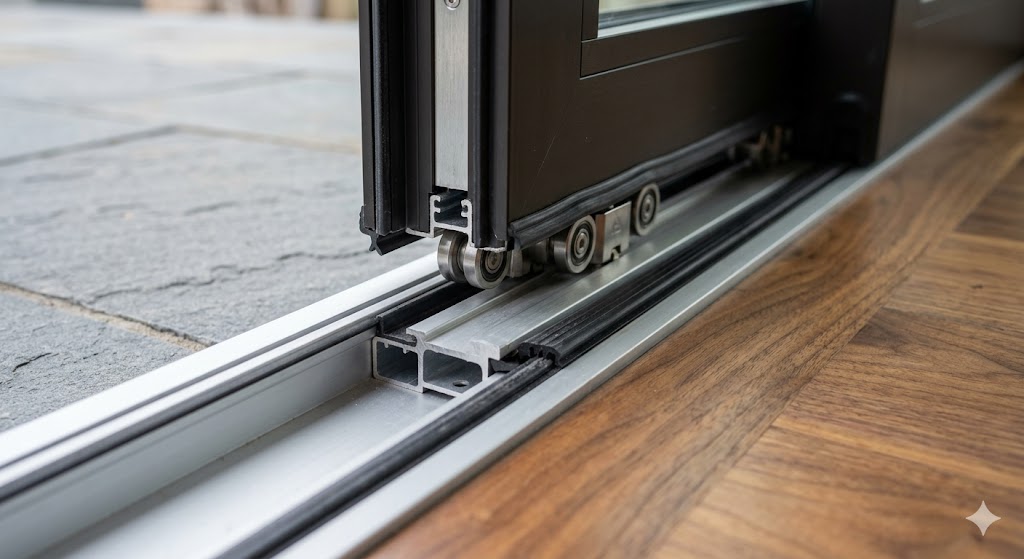
Most "door leaks" aren't just the door - they're the interface between the door system and the building envelope (sill pan, membrane transitions, WRB continuity). A great door in a bad detail will still leak. For installation specifics, see the bracket-mounted installation guide.
Choosing the right glazing configuration - triple vs. double also affects thermal and acoustic performance at large openings.
When to Choose Which
Choose lift-slide when:
- Panels are large/heavy and one-hand operation is the goal
- The project is coastal, high-wind, or high-exposure
- Airtightness and minimizing callbacks are the priority
Choose multi-slide when:
- Maximum opening width with multiple panels is essential
- Pocketing or panel stacking is a design requirement
- Your team is ready to invest in the detailing and tolerance control it demands
FAQ
What makes lift-and-slide doors smoother than regular sliding doors? The mechanism lifts the panel off the seals during movement, eliminating friction. When closed, the panel drops into compression seals under its own weight - so operation stays smooth even on very heavy panels.
Are slim-frame aluminum sliding doors less airtight? Not necessarily - but they're more sensitive to alignment and seal design. Ask for test data on the specific profile you're specifying, not generic certification that may not cover your panel sizes.
What causes water problems at large sliding doors? Usually sill and drainage design, plus integration with the building's waterproofing layers. Blocked weeps, poor substrate leveling, and sequencing mistakes during construction are the common causes.
Have a large opening project and want to talk through system selection, glazing specs, or DDP delivery logistics? Schedule a Call - I typically turn around detailed project quotes within 24 to 48 hours.
Kai, your window guy!