Design-build teams are competing harder than ever for RFPs. Owners want buildings that feel modern and premium - but they expect budgets to hold. Windows and doors are one of the few categories where a DB firm can deliver a visible design upgrade without inflating cost or schedule.
Premium slim-frame and steel-look aluminum systems from European manufacturers make this possible. They elevate a building's visual identity while staying cost-competitive through smart sourcing and early procurement.
Why Windows Are a High-Impact Upgrade
Unlike interior finish upgrades that invite scope creep, premium fenestration:
- Shapes every rendering, leasing brochure, and facade photo from day one
- Increases glass-to-frame ratio for better daylight and modern aesthetics
- Offers loft-style steel-look visuals ideal for adaptive reuse and boutique hospitality
- Yields outsized visual impact per dollar - the prime lever for DB differentiation
Slim-Frame vs. Steel-Look: Quick Comparison
| Feature | Standard Commercial | Slim-Frame Aluminum | Steel-Look Aluminum |
|---|---|---|---|
| Sightline width | 2"-3"+ | ~1"-1.5" | ~1"-1.25" |
| Aesthetic | Utilitarian | Contemporary minimalist | Industrial / loft / heritage |
| U-factor (triple glazed) | 0.35-0.55 | 0.17-0.24 | 0.17-0.24 |
| Cost vs. true steel | - | 50-70% savings | 80-90% savings |
| DB workflow impact | None | Minimal with early lock | Minimal with early lock |
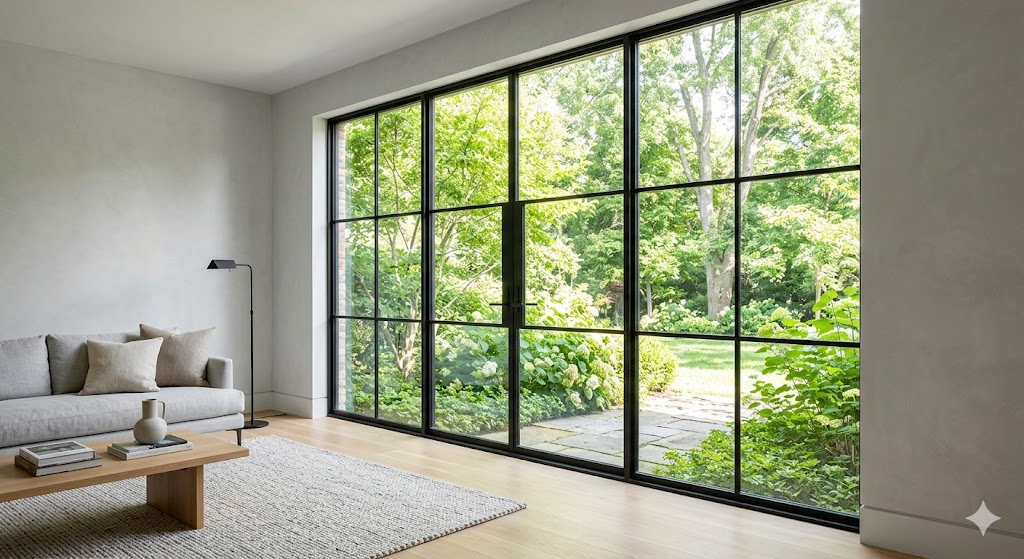
Project Scenario: Adaptive Reuse - 40-Unit Warehouse-to-Residential
Project profile: Former industrial warehouse, converted to 40 residential loft units. Five-story, brick exterior, original steel window openings retained.
| Line Item | Budget Option (U.S. Commercial Aluminum) | Steel-Look European Package |
|---|---|---|
| Window units (180 openings) | $320,000 | $245,000 |
| Freight, duties, insurance (DDP) | Included (domestic) | $28,000 |
| Installation labor | $54,000 (standard) | $48,000 (factory-glazed, faster set) |
| Total fenestration package | $374,000 | $321,000 |
| Per-unit fenestration cost | $9,350 | $8,025 |
Schedule impact: Steel-look European units arrive factory-glazed with hardware pre-installed. No on-site glazing needed. The GC recovered 8 working days on the facade critical path.
Why it won the RFP: The DB team presented steel-look windows in their pursuit renderings. The owner - a boutique developer repositioning industrial stock - saw an immediate visual match to the loft brand they were marketing. The competing team proposed standard commercial aluminum. Same budget tier, dramatically different perceived value.
RFP Window Language: Copy-Paste for Your Next Proposal
DB teams often default to generic fenestration language. Here's specification language that positions premium European systems as a project advantage:
Fenestration Systems: All window and fixed-glazing units shall be European-manufactured thermally broken aluminum, sourced from tier-one system providers (Reynaers, Aluprof, Schuco, or approved equal). Frame sightlines shall not exceed 1.5 inches on standard units and 1.25 inches on steel-look configurations.
Performance Basis: All fenestration shall meet or exceed: U-factor of 0.22 or less (triple-glazed fixed), 0.28 or less (triple-glazed operable); SHGC per ASHRAE 90.1-2022 climate zone requirements; NAFS-08/11 performance class AW or HC as applicable; air infiltration of 0.06 CFM/ft2 or less at 6.24 PSF.
Procurement Model: Fenestration shall be procured under a DDP (Delivered Duty Paid) landed-cost model inclusive of manufacturing, ocean freight, customs clearance, duties, insurance, and jobsite delivery. 90-120 day price holds shall be secured during design development to protect GMP accuracy.
Documentation: Supplier shall provide thermal performance documentation (NFRC format available if needed for energy code compliance), NAFS test reports where applicable, shop drawings, and anchoring details as part of the submittal package.
This language does three things: (1) sets a performance floor that eliminates commodity substitutions, (2) signals you've already sourced and priced the fenestration, and (3) protects your GMP by locking landed-cost procurement early.
For NFRC and NAFS certification details, see the compliance guide.
The Cost of NOT Specifying Early
Late window decisions are one of the most expensive mistakes in design-build. Here's what happens when fenestration is deferred past 60% DD:
- VE churn: The architect specifies premium windows at SD, but no one prices them properly. At 90% DD, the estimator flags them as over budget. Two to three weeks of meetings and re-pricing follow - burning $15,000-$30,000 in soft costs plus schedule.
- Product substitution fights: The GC submits a budget substitute at permit. The architect rejects it. Another round of re-specification. The owner loses confidence in the team.
- Schedule slip from late procurement: European production runs 8-10 weeks, plus 3-5 weeks ocean freight. If the order isn't placed until CD, windows arrive 4-6 weeks after the facade is ready. Typical cost of a 4-week delay on a 120-unit project: $60,000-$100,000 in general conditions and trade re-mobilization.
The fix: Request a price hold from your fenestration supplier at 30% DD. I provide 90-120 day price holds with full performance data - enough to carry the number through GMP without guessing. For more on managing material cost and schedule risk, see the dedicated guide.
Things to Plan For
Even premium systems have considerations worth flagging upfront:
- Custom steel-look grid patterns require one to two submittal rounds for shop drawing approval - plan this into your schedule
- Tall or heavy units (over 80" height or 200 lbs) need structural review of anchoring
- Late design changes after price hold expiration trigger re-pricing - lock system type early
- Phased or tight urban sites need crate sequencing planned in advance
I address these proactively through early engineering coordination, consolidated DDP logistics, and price-hold windows.
FAQ
How much cheaper are European slim-frame windows vs. U.S. brands? Typically 30-50% less on the product itself. After DDP freight, duties, and insurance, total landed savings run 15-35% depending on volume. Savings are most pronounced on projects over 100 openings.
Can steel-look aluminum pass for real steel in adaptive reuse? Yes. The sightline width (1"-1.25") and square-shouldered profile are visually indistinguishable from true steel at normal viewing distance. The aluminum version weighs less, insulates better, costs 80-90% less, and has no tariff exposure on steel.
Do premium windows slow down DB schedules? No - if specified early. Factory-glazed European units often install faster than site-glazed domestic alternatives because there's no on-site glazing step. The schedule risk comes from late specification, not from the product.
Send me your drawings (PDF + DWG), rough openings, and performance targets. I'll return a proposal with landed DDP pricing and performance documentation within 24-48 hours. Request a Quote
Kai, your window guy!